Direct Answer
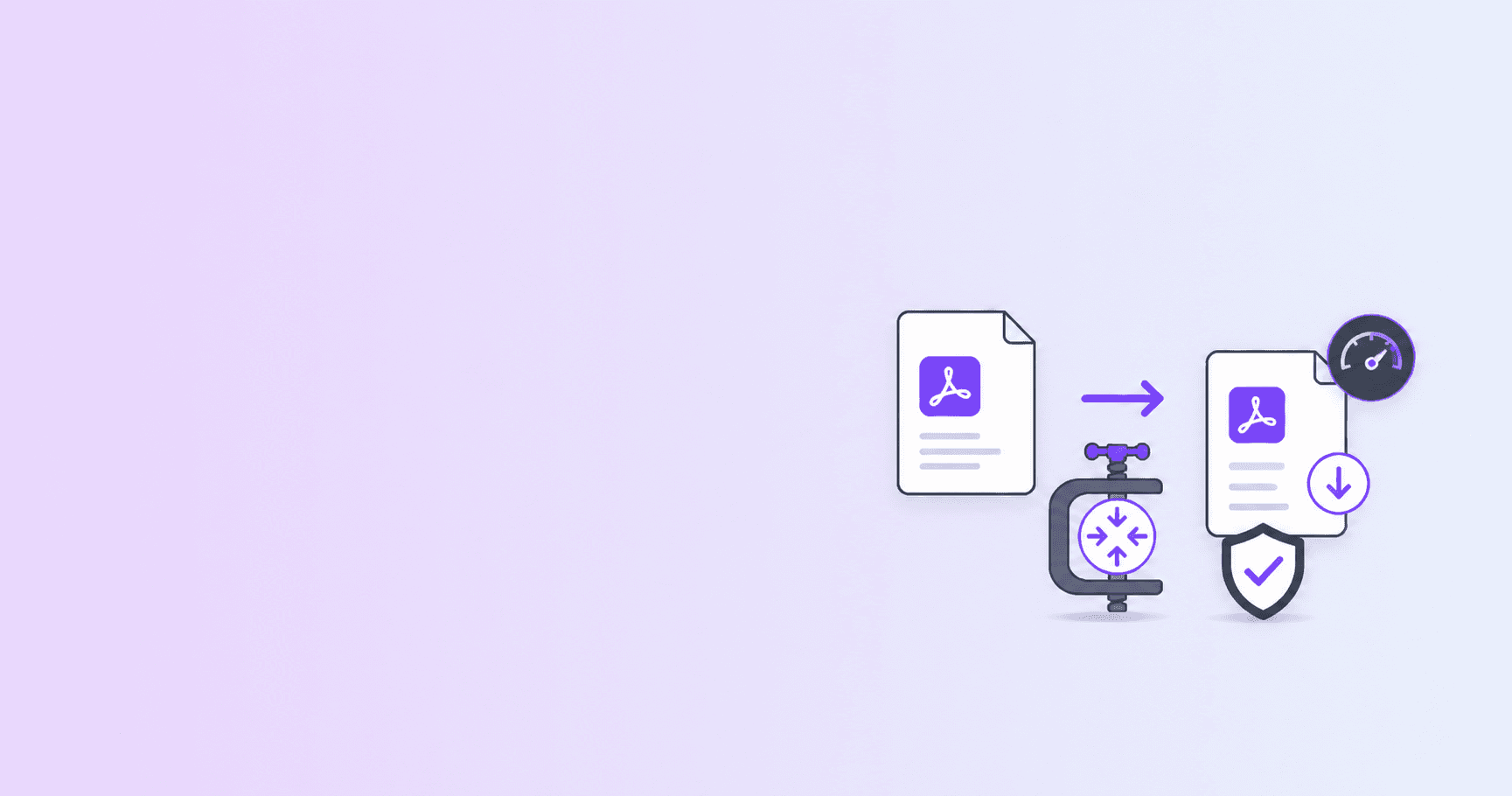
To reduce PDF file size on iPhone without an app, open ShellPDFs Compress PDF in Safari, upload the PDF from Files or iCloud Drive, choose Basic or Strong compression, then download the smaller file. It works the same way on Android in Chrome.
You've been there. You're trying to send a PDF — a job application, an invoice, maybe a form the doctor's office sent you — and your phone keeps telling you the file is too large. Or WhatsApp silently downgrades it. Or Gmail refuses the attachment altogether.
The instinct is to Google "compress PDF app" and download something. But most of those apps are either paid, cluttered with ads, or want permissions that feel unnecessary for a simple file task. The good news is you don't need any of them.
Here's how to compress a PDF on your iPhone or Android phone in about 30 seconds, using nothing but a browser.
Can You Reduce PDF Size on iPhone Without Installing Anything?
Yes. Safari can upload files from the built-in Files picker, so you can use an online compressor directly from your phone. You do not need a dedicated PDF compressor app, a desktop computer, or a paid mobile utility.
There are two practical routes:
- Use a browser tool when you need the smallest file quickly for email, WhatsApp, a job portal, or a government form.
- Recreate the PDF at lower quality when you still have the original photos or scan. This can help if the PDF was made from very high-resolution camera images.
If the PDF already exists and you just need it smaller, the browser tool is the faster route.
Why PDFs Get So Large on Mobile
Before jumping to the fix, it's worth knowing why this happens — because understanding the cause helps you avoid the same problem next time.
Most oversized PDFs on phones come from one of three sources:
Photos exported as PDF: When you export iPhone photos as a PDF (for example, via the Share Sheet), iOS embeds full-resolution images. A single 12-megapixel photo can be 4–6 MB on its own, so a 10-page "document" of photos becomes a 40–60 MB PDF quickly.
Scanned documents: The built-in camera scanner in the Files app or Notes app is convenient, but it defaults to saving scans at very high resolution. Great for archiving, terrible for emailing.
PDFs created on desktop and transferred over: A presentation with lots of embedded graphics, or a design file exported to PDF, can easily hit 20–50 MB. That size is manageable on a laptop but becomes a headache when you need to share from your phone.
In all three cases, compression works by resampling images to a lower resolution — typically 150 dpi instead of 300+ dpi — and removing embedded thumbnails and redundant metadata. The result looks identical on screen but is far smaller on disk.
How to Compress a PDF on iPhone
You don't need to download anything. Just open Safari and follow these steps.
Step 1: Go to ShellPDFs in Safari
Navigate to shellpdfs.com and tap Compress PDF. The tool loads directly in your browser — no app install, no account. You can also open Compress PDF directly.
Step 2: Upload your PDF
Tap the upload area. Your iPhone will show options: you can pick from Files, iCloud Drive, or anywhere else your PDF is saved. If your PDF is in Google Drive or Dropbox, you can also access those through the Files picker if you have those apps installed.
Step 3: Choose your compression level
ShellPDFs offers two main modes:
-
Basic compression — Good for everyday use. Reduces file size by roughly 40–60% while keeping text and images looking sharp. Use this for CVs, reports, and documents you want to look professional.
-
Strong compression — More aggressive. Can reduce file size by 70–85%. Use this when you need to hit a strict limit (like a portal that only accepts files under 2 MB) and visual perfection is less important than file size.
If you're not sure, start with Basic. You can always re-run with Strong if the output is still too large.
Step 4: Download and share
Once compression finishes, tap Download. Safari saves the file to your Downloads folder. From there, tap it to open, then tap the Share icon to send it via WhatsApp, iMessage, email, or save it to a specific folder in Files.
That's it. The whole process takes under a minute even on a slow connection, because the file is processed on a server — you only need to upload and download, not wait for your phone to crunch numbers.
How to Compress a PDF on Android
The process is identical, just in Chrome instead of Safari.
Open Chrome and navigate to shellpdfs.com. Tap Compress PDF, then tap the upload area. Android will open a file picker — navigate to wherever your PDF is saved (Downloads, Google Drive, internal storage, etc.) and select it.
Choose Basic or Strong compression, wait for the file to process, and tap Download. Chrome saves it to your Downloads folder. From there, open your file manager or use Android's Share menu to send it wherever you need.
One note for Android users: if you have a PDF open in a third-party app (like Adobe Reader or a document viewer), you may need to save it to your local storage first before ShellPDFs can access it through the browser's file picker.
Compress a PDF Under 2 MB on iPhone
If a portal or email form says your PDF must be under 2 MB, start with Strong compression. The 2 MB target is realistic for most resumes, invoices, forms, and short scanned documents, but it depends on what is inside the file.
Use this order:
- Open Compress PDF in Safari.
- Choose Strong compression.
- Download the result and check the file size in Files.
- If it is still above 2 MB, remove unnecessary pages with Remove PDF Pages, then compress again.
For a deeper size-limit walkthrough, use the Compress PDF to 2MB guide.
Compress PDFs for Email, WhatsApp, and Upload Portals
Different destinations have different tolerance for quality loss:
| Destination | Best Setting | Why |
|---|---|---|
| Email attachments | Basic first, then Strong if needed | Most email limits are generous enough for readable compression |
| WhatsApp or chat apps | Strong | Smaller files upload faster on mobile networks |
| Job portals | Strong | Portals often enforce strict 1 MB or 2 MB limits |
| Client documents | Basic | Keeps images cleaner while still reducing size |
| Scanned forms | Strong | Scans are image-heavy and usually shrink the most |
When Compression Isn't Enough
Sometimes you compress a PDF and it's still larger than you need. Before giving up, try these things:
Remove pages you don't need: If you're sending a 20-page document but only 5 pages are relevant to the recipient, remove the other 15 pages first using the Remove PDF Pages tool, then compress. Fewer pages means smaller file even before compression.
Run Strong compression: If you used Basic, try Strong. For scanned documents especially, the difference can be dramatic — a 15 MB scan can sometimes come down to 1.5 MB on Strong.
Check if the PDF has duplicate or embedded pages: Some PDFs — especially those exported from presentation software — have pages embedded as images rather than native PDF content. These compress well but only if the compression setting actually targets image data.
Split and send in parts: If you have a legitimately large document that needs to stay complete, use the Split PDF tool to break it into smaller sections, compress each separately, and send them as multiple files. Not ideal, but sometimes necessary for very large files.
Specific Size Targets
A lot of people search for how to get a PDF under a specific size limit. Here's a rough guide to what's achievable with compression alone:
Under 10 MB: Almost always achievable with Basic compression on any typical document. If it's not, check whether the PDF contains very high-resolution scanned pages.
Under 5 MB: Usually achievable with Basic compression on text-heavy documents. For image-heavy files, you may need Strong.
Under 2 MB: Requires Strong compression on most documents. For very image-heavy PDFs, you might also need to remove pages or split the document.
Under 1 MB: Achievable on many text-heavy PDFs with Strong compression. For documents with lots of images, you may need to remove pages or accept a higher file size. A 20-page scanned document is unlikely to get below 1 MB without looking degraded.
A Note on Privacy
When you use Private Compression in ShellPDFs, the PDF is processed in your browser and is not uploaded. If you choose Cloud Compression for stronger results, the file is uploaded to an isolated worker for processing and deleted after the job completes.
If you're compressing something genuinely sensitive — medical records, legal documents, financial statements — start with Private Compression. If you need stronger compression than your device can produce and you are comfortable with temporary cloud processing, use Cloud Compression.
For most everyday documents, the browser workflow is significantly more convenient than dealing with desktop software just for a quick file size reduction.
Frequently Asked Questions
ShellPDFs Team
The ShellPDFs editorial group writes and maintains guides for everyday PDF workflows, with updates made when tool behavior or documented limits change. See our editorial standards for the process behind each article.
Questions or feedback? Get in touch.